The path of a piece of information
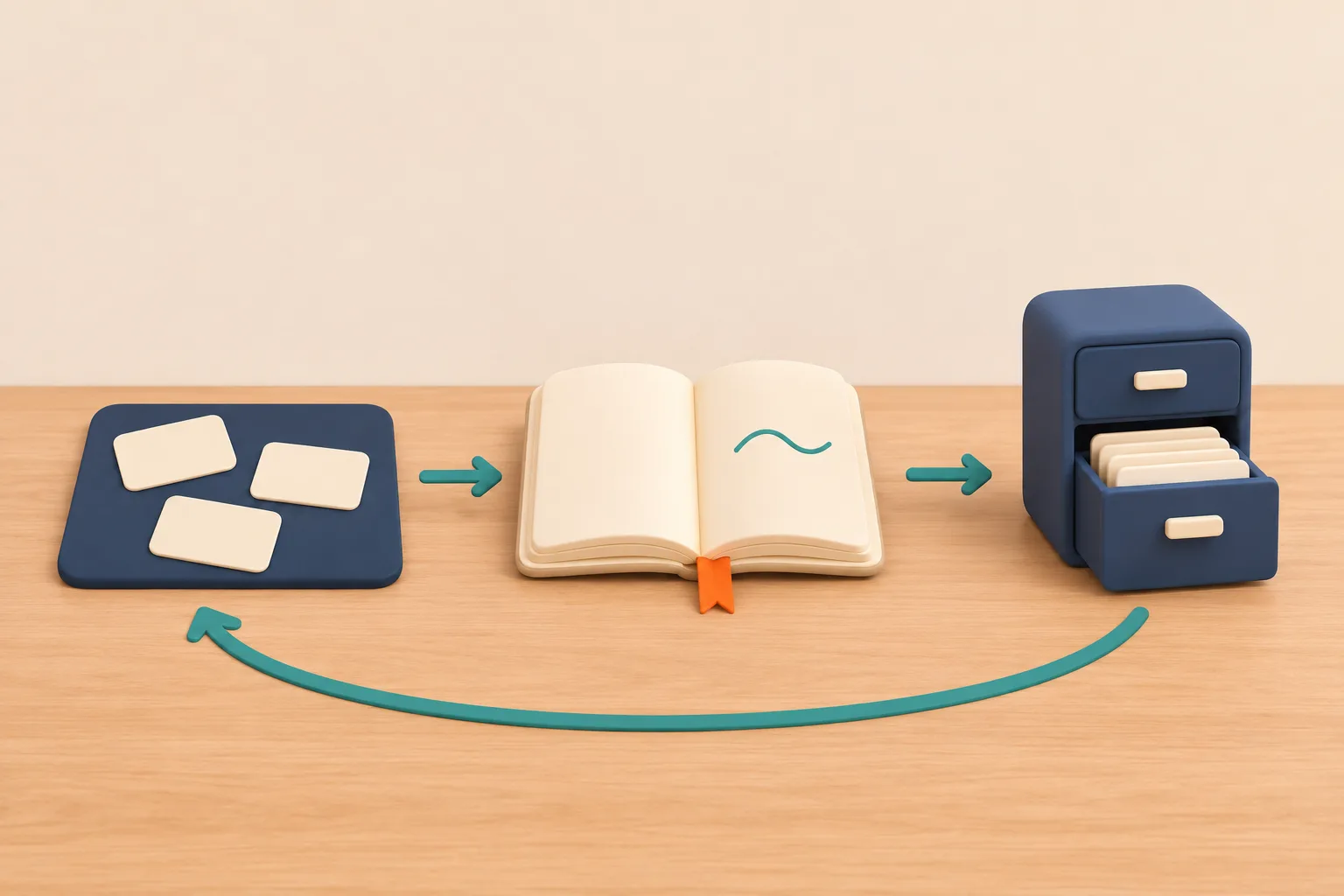
Available in the conversation
Task, history and tool results are ready for the current model call.
With LeaYou write: mornings work better for Lea. That is now in context.
Select for later
The application moves selected facts into durable storage, on request or by its own rules.
With LeaA short note is saved: Lea prefers mornings.
Keep for reference
An archive retains earlier messages. A search index makes relevant passages findable.
With LeaThe full conversation stays in the archive in case someone wants to reread the wording.
Bring back into context
Relevant entries are loaded or searched. Only then can the model take them into account.
With LeaOn the next task about Lea, the note is retrieved and shapes the proposal.
Three places for information.
In the current conversation
Context
Task, conversation and tool results for the current model call.
For future conversations
Memory
Selected facts and experience retained beyond a session.
For reference
Archive
Earlier messages. A search index helps locate relevant passages.
Illustrative examples. Each product determines what is saved and loaded.
Explore the terms
Conversation context contains information for the current model call. Persistent memory retains selected facts and experience for later conversations. An archive preserves earlier messages; a search index helps locate relevant passages.
How a note becomes useful again.
Select and save
Useful later? Temporary? Already outdated?
Mornings work better for Lea. Please remember that.
What gets saved, and when?
Agents can save information on explicit request, during a task or in a later background review. The selection rules matter: what remains useful, what is temporary, and how are corrections handled?
Retrieve what is relevant
A saved note helps once it reaches the current context.
How does the agent find the right note?
A small core of knowledge can load at conversation start. Larger collections can be searched on demand by keywords, semantic similarity or linked topics. Stored information becomes useful when the agent retrieves it appropriately for the current task.
TRY IT YOURSELF
Where does this belong?
Sort each piece of information into its place. The split is schematic, as each product sets its own details.
The task you just wrote
Correct.Not quite. Context It is the input for the current model call.
Lea prefers morning appointments.
Correct.Not quite. Memory A short preference that stays useful. This is what memory is for.
The complete conversation from March
Correct.Not quite. Archive Earlier messages stay there and can be found again through search.
The result of the calendar search just now
Correct.Not quite. Context Tool results are part of the current working material.
Your time zone
Correct.Not quite. Memory It applies across many conversations and is worth keeping.
0 of 5 correct.
TRUE OR FALSE?
Three things people often say.
Whatever is stored is always available to the model.
Correct.Not quite. False Stored information only helps once it reaches the context for the current task.
Condensing creates lasting memories.
Correct.Not quite. False Compaction shortens the current context. Consolidation maintains durable knowledge.
Deletion has to consider memory, archive and search index separately.
Correct.Not quite. True A deleted memory says nothing yet about conversation archives, search indexes and backups.
0 of 3 correct.
Condense or maintain for the long term?
IN THE CURRENT CONVERSATION
Compaction
Condenses context for the next steps.
IN PERSISTENT MEMORY
Consolidation
Merges knowledge, corrects it and removes outdated entries.
A new conversation can reload saved knowledge. Which details survive depends on the product and its configuration.
Explore the terms
Compaction condenses the current conversation context. Consolidation maintains durable knowledge by merging, correcting and removing outdated entries. A new conversation can reload saved memories. Which details survive depends on the product and its configuration.
Memories need maintenance.
- InspectWhat is stored, and where did it come from?
- CorrectDoes a change reach future answers?
- DeleteCheck memory, archive, search index and backups separately.
Origins, corrections and re-ingestion
Controllable memory makes stored content and its origins inspectable. Corrections should reach later answers. Deletion needs to account separately for memories, conversation archives, search indexes and backups. Re-ingestion from old sources also needs a clear rule.
Who may use which knowledge?
Language and time zone can be shared user information. Domain decisions, experience and ongoing responsibilities belong to the respective agent’s memory. Shared knowledge needs ownership, approved storage and clear read and editing permissions.
Six questions to ask about agent memory.
- Where is knowledge stored?
- What is saved, and when?
- What can I edit and delete?
- Who can access it?
- How is it retrieved?
- What survives a new conversation?
Mechanism, evidence and recall quality
Compare storage, selection and timing, editing controls, scope, retrieval and conversation continuity. Sources and review dates provide context. Details without public evidence remain open questions. A documented mechanism describes the architecture; actual recall quality becomes apparent in use.
Explore product implementations
Profiles provide sources and review dates. The comparison places the same six criteria side by side.